
Wool has been used to make rugs for thousands of years, and it has outlasted almost every material that has tried to replace it. That longevity is not sentimental. It is the result of a fibre that happens to be very good at the job.
When people weigh up handmade wool rugs against synthetic alternatives, the wool option often looks more expensive on the day and turns out to be the more sensible choice over the years. Understanding why comes down to what wool actually does underfoot, in a room, and over time.
Here are the benefits that keep wool at the centre of good rug making, and what they mean for a real home rather than a showroom floor.
Wool is built to take everyday traffic
A wool fibre is naturally springy. Crush it underfoot and it recovers, which is why a wool rug holds its pile and its appearance far longer than most synthetics in the same spot. Furniture indentations settle out. Footpaths worn through a living room take much longer to appear.
That resilience is the single most practical reason handmade wool rugs suit the rooms people actually live in. Hallways, family lounges and spaces where children and pets come and go are exactly where a hard-wearing natural fibre earns its keep.
It resists dirt and spills better than you would expect
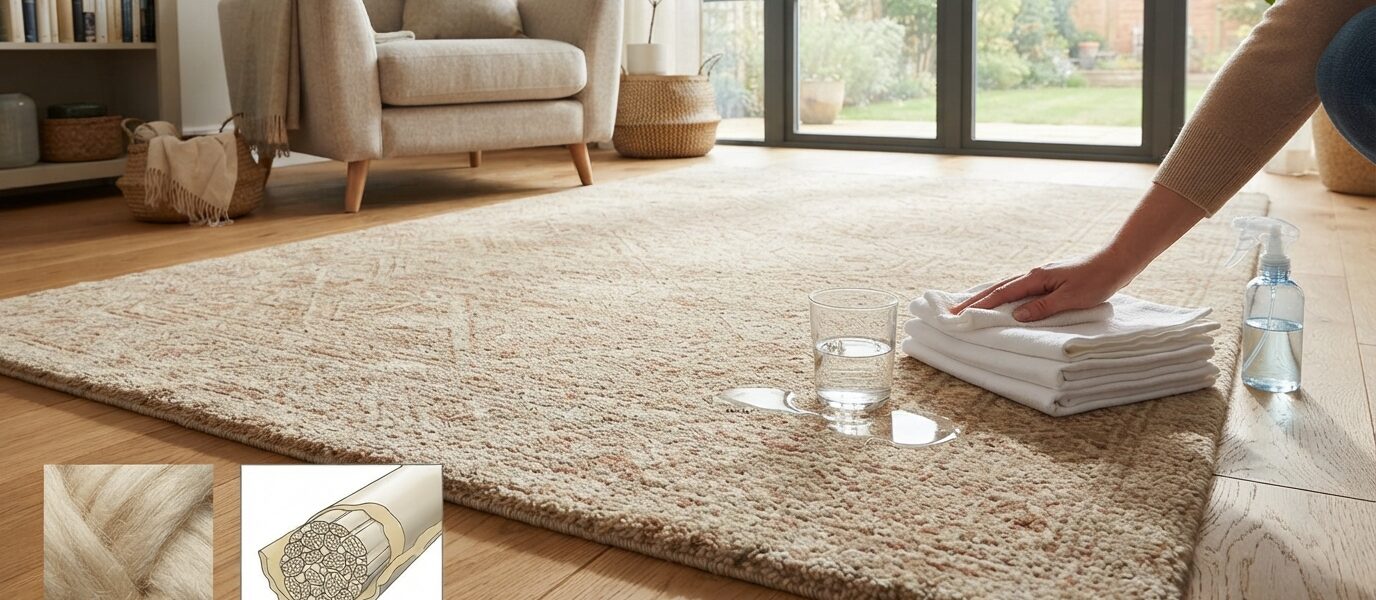
Wool carries a natural protective layer that makes it slow to absorb liquids. A spill tends to sit on the surface for a moment rather than soaking straight in, which buys you time to blot it before it becomes a stain.
The same structure helps with dry soil. Wool tends to hold dirt loosely near the surface rather than trapping it deep in the pile, so regular vacuuming lifts a surprising amount away. For busy households, that lower-maintenance quality is one of the quiet benefits of choosing wool.
Warmth, softness and a calmer room
Wool insulates. A wool rug feels warm underfoot on a cold morning and adds a layer of comfort to hard floors such as timber, tile and polished concrete.
It also softens sound. Open-plan rooms with hard surfaces can feel echoey, and a dense wool rug absorbs noise in a way that makes a space feel more settled. The softness is tactile too. There is a reason people instinctively want to sit on the floor of a room with a good wool rug in it.
A naturally renewable and biodegradable fibre
Wool is shorn from sheep and grows back, which makes it a renewable material in a way that petroleum-based synthetics are not. At the end of a very long life, a wool rug will also break down naturally rather than lingering.
For anyone weighing the environmental side of a purchase, this matters. Choosing handmade wool rugs made by skilled weavers is a considered, lower-impact option compared with a disposable synthetic piece that will be replaced in a few years.
Wool works across every kind of construction
Wool is not a single product. It is spun and worked in different ways depending on how a rug is made. Hand-knotted rugs use wool tied knot by knot for the most enduring, finely detailed pieces. Hand-tufted rugs bring wool to a more accessible price with a faster construction. Hand-loomed rugs use it for texture and weight rather than intricate pattern.
Keeping those distinctions clear matters when you are comparing options, because they carry very different value. A specialist should be able to tell you exactly how a wool rug was made and what that means for how it will wear. Hali, family-owned since 1979, has spent four generations sourcing and designing handmade wool rugs across all of these constructions, and this kind of guidance is worth asking for before you buy.
Caring for a wool rug
Wool asks very little. Vacuum regularly without a rotating beater bar on its highest setting, deal with spills quickly by blotting rather than rubbing, rotate the rug now and then so it wears evenly, and have it professionally cleaned every year or two depending on traffic.
A little shedding when a wool rug is new is normal and settles down. None of this is difficult, and it is a small amount of care for a piece that can stay beautiful for many years.
Comfort, durability and good looks in one material
The appeal of wool is that it does not ask you to choose between comfort, durability and good looks. It offers all three, which is why it has stayed at the heart of fine rug making for so long.
If you are considering handmade wool rugs for your own home, it is worth seeing and feeling a few in person before deciding, because wool is one of those materials that makes far more sense underfoot than on a screen.